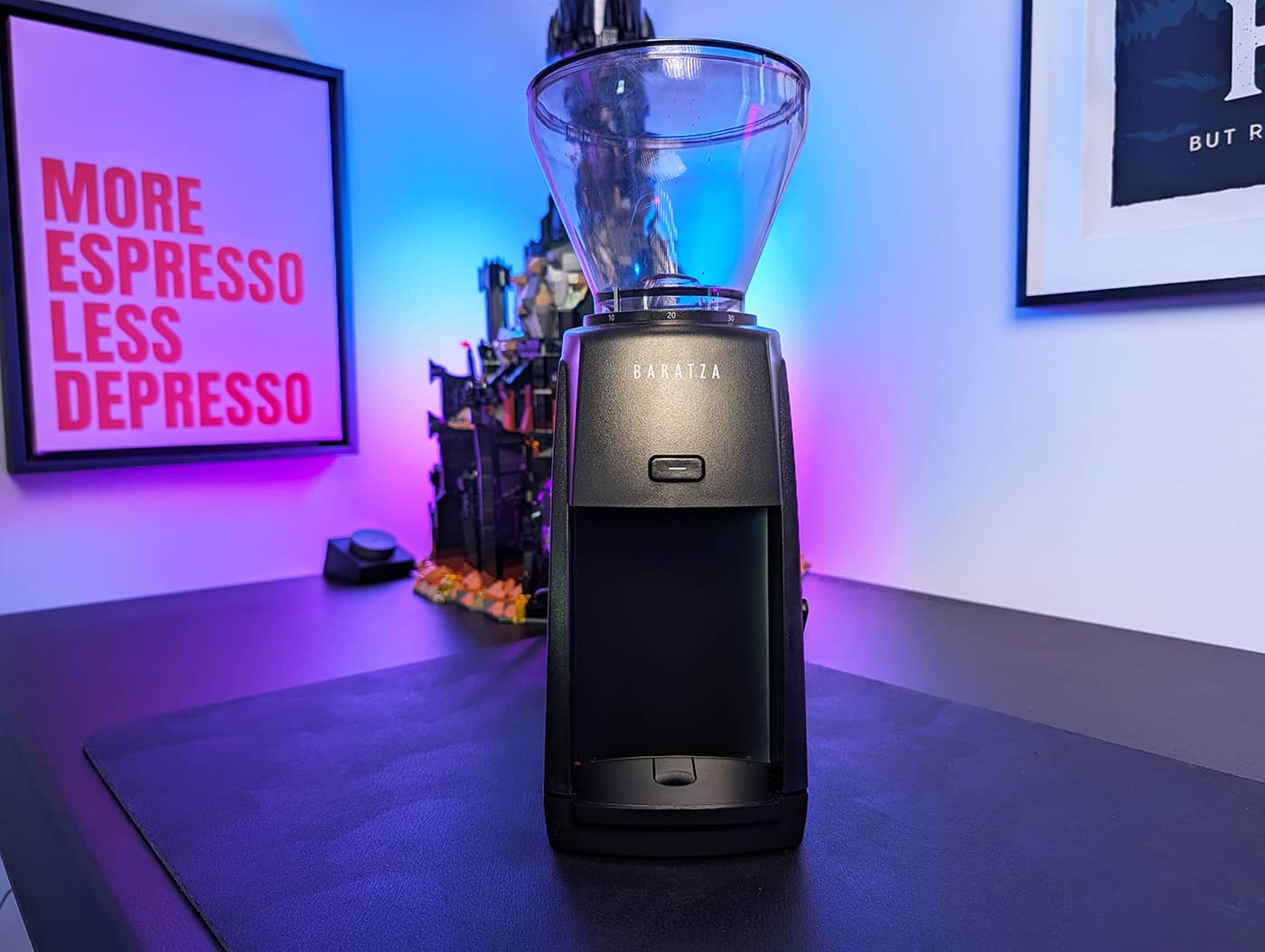
Baratza Encore ESP Review and Grind Chart
An iconic entry-level electric grinder with tight consistency at espresso levels but varying retention issues.
Grind data is captured via DiFluid Omni NIR analysis. I plot the particle distribution across 16+ settings to identify the 'Optimal Zone' for each brew method. Actual results vary based on roast type and freshness, among others; however, it remains a starting point for dialing in.
This site is 100% ad-free and always will be. This particular review was conducted on a factory-new, calibrated unit, and was not sponsored. I purchased this unit for testing purposes. Purchases made through our links may earn a commission, supporting the testing and data acquisition.
Encore ESP Grind Size Chart
A Note on These Settings: The interactive chart below uses a combination of manufacturer and crowdsourced data from CoffeeOS to give you a rough "ballpark" starting point for dialing in. For the true technical breakdown, scroll down to my particle analysis, where I use a DiFluid Omni to measure actual micron distribution, fines percentage, and grind consistency of this unit.
Roast Level
Optimal points at baseline values
Encore ESP Settings
Click a setting to move the cursor, or hover the chart belowTap a setting to move the indicator, or hold and drag the line on the chart
How to Read This Chart
| Brew Method | Minimum Microns | Maximum Microns | Optimal Microns (Medium Roast) | Optimal Microns (Light Roast) | Optimal Microns (Dark Roast) | Recommended Setting |
|---|---|---|---|---|---|---|
| Espresso | 180 μm | 380 μm | 280 μm | 230 μm | 360 μm | 4 |
| Moka Pot | 250 μm | 450 μm | 350 μm | 300 μm | 430 μm | 12 |
| AeroPress | 320 μm | 960 μm | 550 μm | 500 μm | 630 μm | 22 |
| Pour Over | 410 μm | 930 μm | 600 μm | 550 μm | 680 μm | 23 |
| Filter Machine | 500 μm | 900 μm | 700 μm | 650 μm | 780 μm | 25 |
| Cold Drip | 600 μm | 1000 μm | 800 μm | 750 μm | 880 μm | 27 |
| French Press | 690 μm | 1300 μm | 900 μm | 850 μm | 980 μm | 30 |
| Cold Brew | 800 μm | 1500 μm | 1100 μm | 1050 μm | 1180 μm | 34 |
Grind Size Ranges for Encore ESP
- Espresso: 180 to 380 microns. Optimal grind size is 280 microns for medium roast, 230 microns for light roast, and 360 microns for dark roast.
- Moka Pot: 250 to 450 microns. Optimal grind size is 350 microns for medium roast, 300 microns for light roast, and 430 microns for dark roast.
- AeroPress: 320 to 960 microns. Optimal grind size is 550 microns for medium roast, 500 microns for light roast, and 630 microns for dark roast.
- Pour Over: 410 to 930 microns. Optimal grind size is 600 microns for medium roast, 550 microns for light roast, and 680 microns for dark roast.
- Filter Machine: 500 to 900 microns. Optimal grind size is 700 microns for medium roast, 650 microns for light roast, and 780 microns for dark roast.
- Cold Drip: 600 to 1000 microns. Optimal grind size is 800 microns for medium roast, 750 microns for light roast, and 880 microns for dark roast.
- French Press: 690 to 1300 microns. Optimal grind size is 900 microns for medium roast, 850 microns for light roast, and 980 microns for dark roast.
- Cold Brew: 800 to 1500 microns. Optimal grind size is 1100 microns for medium roast, 1050 microns for light roast, and 1180 microns for dark roast.
Encore ESP Grinder Settings
- Setting 0: 230 microns
- Setting 2: 253 microns
- Setting 4: 276 microns
- Setting 6: 299 microns
- Setting 8: 322 microns
- Setting 12: 368 microns
- Setting 16: 414 microns
- Setting 20: 460 microns
- Setting 21: 506 microns
- Setting 22: 552 microns
- Setting 23: 598 microns
- Setting 24: 644 microns
- Setting 25: 690 microns
- Setting 26: 736 microns
- Setting 27: 782 microns
- Setting 28: 828 microns
- Setting 29: 874 microns
- Setting 30: 920 microns
- Setting 31: 966 microns
- Setting 32: 1012 microns
- Setting 33: 1058 microns
- Setting 34: 1104 microns
- Setting 35: 1150 microns
- Setting 36: 1196 microns
- Setting 37: 1242 microns
- Setting 38: 1288 microns
- Setting 39: 1334 microns
- Setting 40: 1380 microns
Full Review and Benchmark Test
Contents
The Baratza Encore ESP is the middle child of Baratza’s Encore lineup, sitting between the entry-level Encore and the more feature-rich ESP Pro. Coming in at $200, the ESP seems geared towards espresso drinkers looking to add an affordable (and most likely first) electric grinder to their home setup. While the ESP in its name places espresso front and centre, the Encore ESP is an all-rounder, devoting the first 20 of its 40 grind settings to espresso and the second 20 to coarser grinds (ratcheting up the microns-per-click from 20 in settings 1-20 to 90 in settings 21-40). As a more budget-friendly grinder, we’re looking to see if the ESP’s no-frills, low-cost approach compared to options further up the price scale can still offer the control and precision that is needed to grind espresso.
Features:
- Black or white finish
- Quick-release 40mm M2 conical burr
- Stepped grind adjustments split between espresso range (settings 1-20 at 20 microns per click) and coarser grinds (settings 21-40 at 90 microns per click)
- Grounds bin for multiple doses
- Dose cup for single doses (default 54mm portafilter compatibility with a 58mm adaptor)
- Included cleaning brush and shims
Unboxing
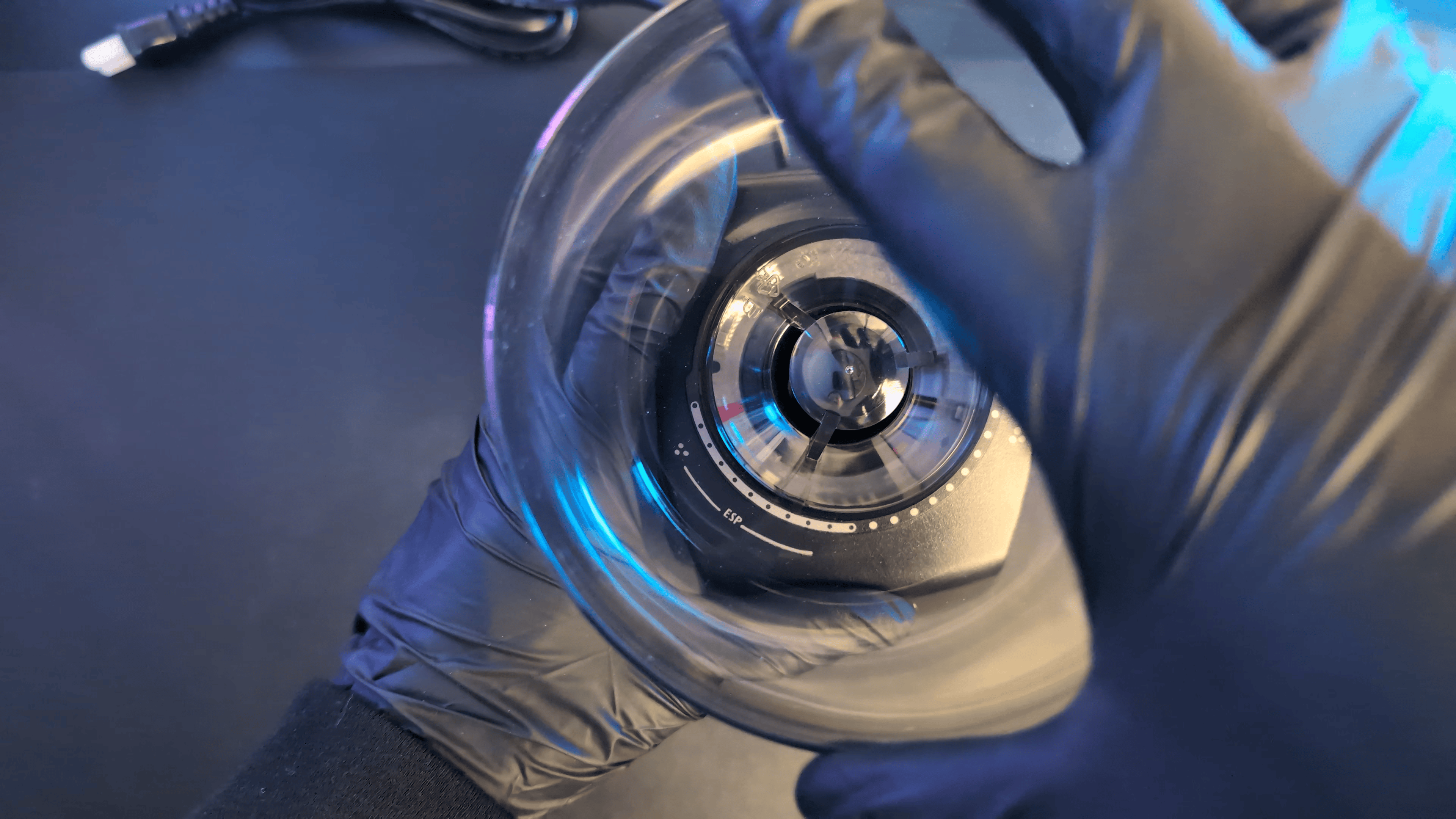
The Encore ESP strikes a balance between simplicity and usability from the moment you take it out of its packaging. After opening the main box to reveal instructions and a slightly smaller Russian-doll-style box, the components are split between the hopper and the body. All the packaging is either recyclable or compostable (a nice touch - no styrofoam here), and the small pieces are stored economically in the grinder body, with the dose cup, dose cup base, cleaning brush, shims, and on/off switch all snugly stored in the grounds bin.
Setting things up only takes a few seconds (plus the few minutes it will take to wash the hopper, grounds bin, and dose cup with soapy water). The ring burr holder is already loosely in place, and it snaps easily into the body, with corresponding red indicator on the body and holder indicating where it should go. Same goes for the hopper which slots in on top of the ring burr once the white indicator line on the hopper aligns with the arrow on the grinder body.
Once the on/off switch is snapped onto the side of the grinder body, you’re ready to grind. Particularly for beginners, the whole experience is about as straightforward as you could hope for from a new electric grinder.
Design
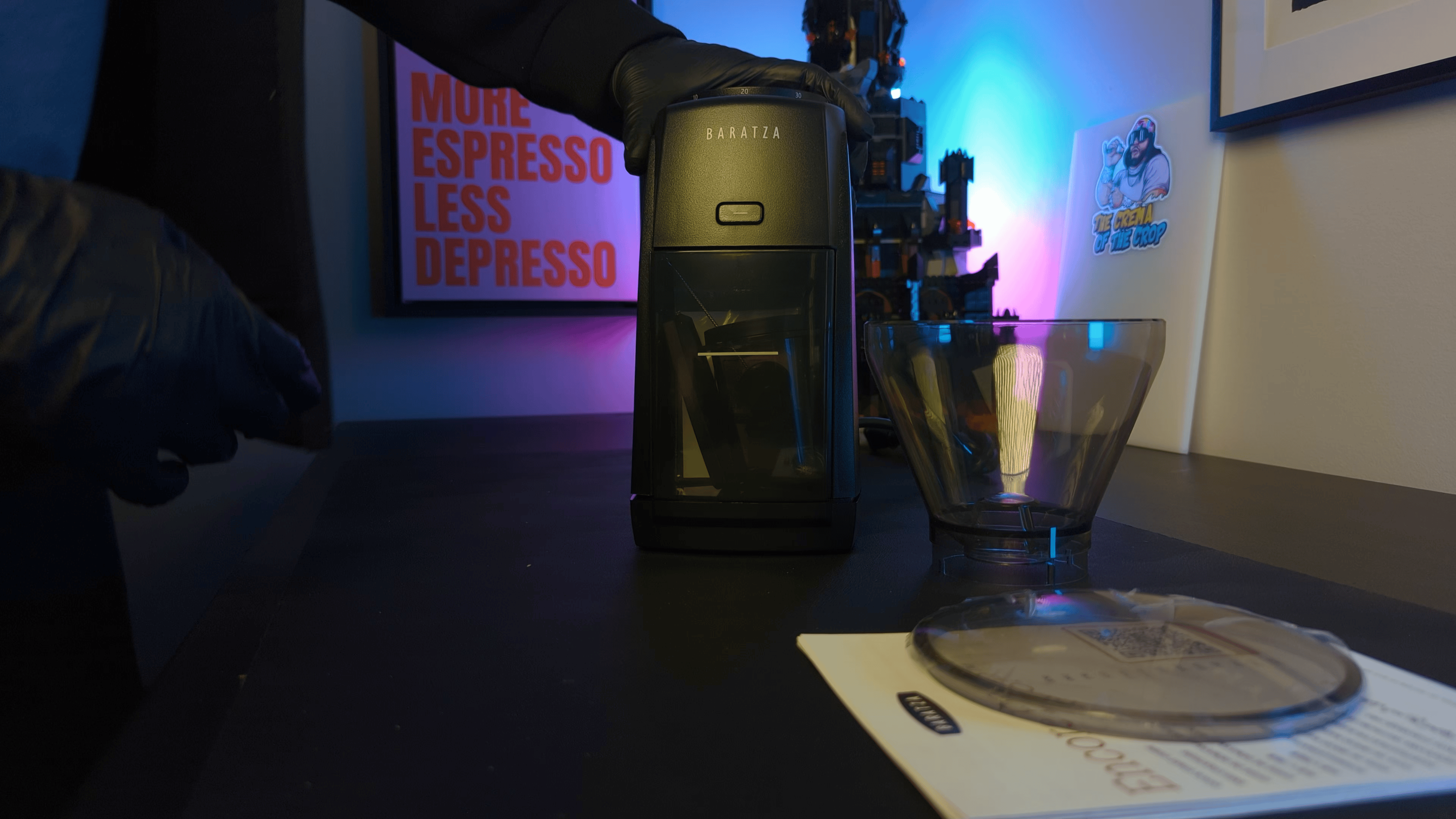
Design is where the trade-off between practicality and cost-saving can be most keenly felt with the Encore ESP. As we’re dealing with a budget option, we’re talking about predominately plastic components here, which is both understandable and not a huge deal. Aesthetically, the Encore ESP looks sleek and minimal if a bit basic. It won’t look out of place on most kitchen counters.
Part of the minimal look of the Encore ESP can be chalked up to how it integrates changing grind settings into the hopper. Twisting the hopper from side to side will increase or decrease the grind setting. Grinding is equally simple. It can either be done in controlled pulses by hitting the button on the front of the grinder, or continuously by flipping the on/off switch on the side.
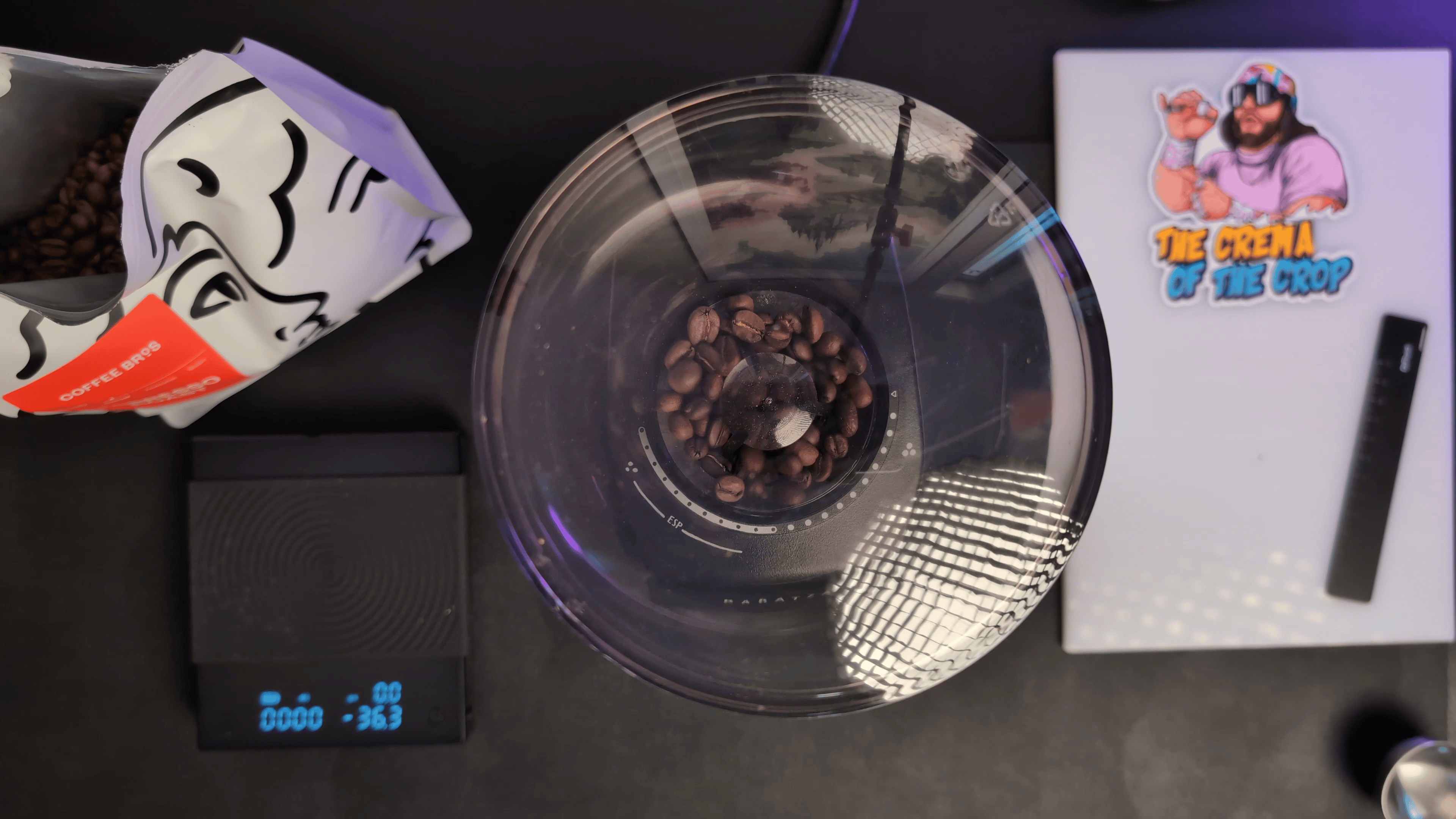
In theory, that should make it easy to make a single dose of espresso: Weigh your beans, flip the switch for a hot start, add your beans to the hopper, and watch your measured dose fall into the dose cup below before flipping it into your portafilter.
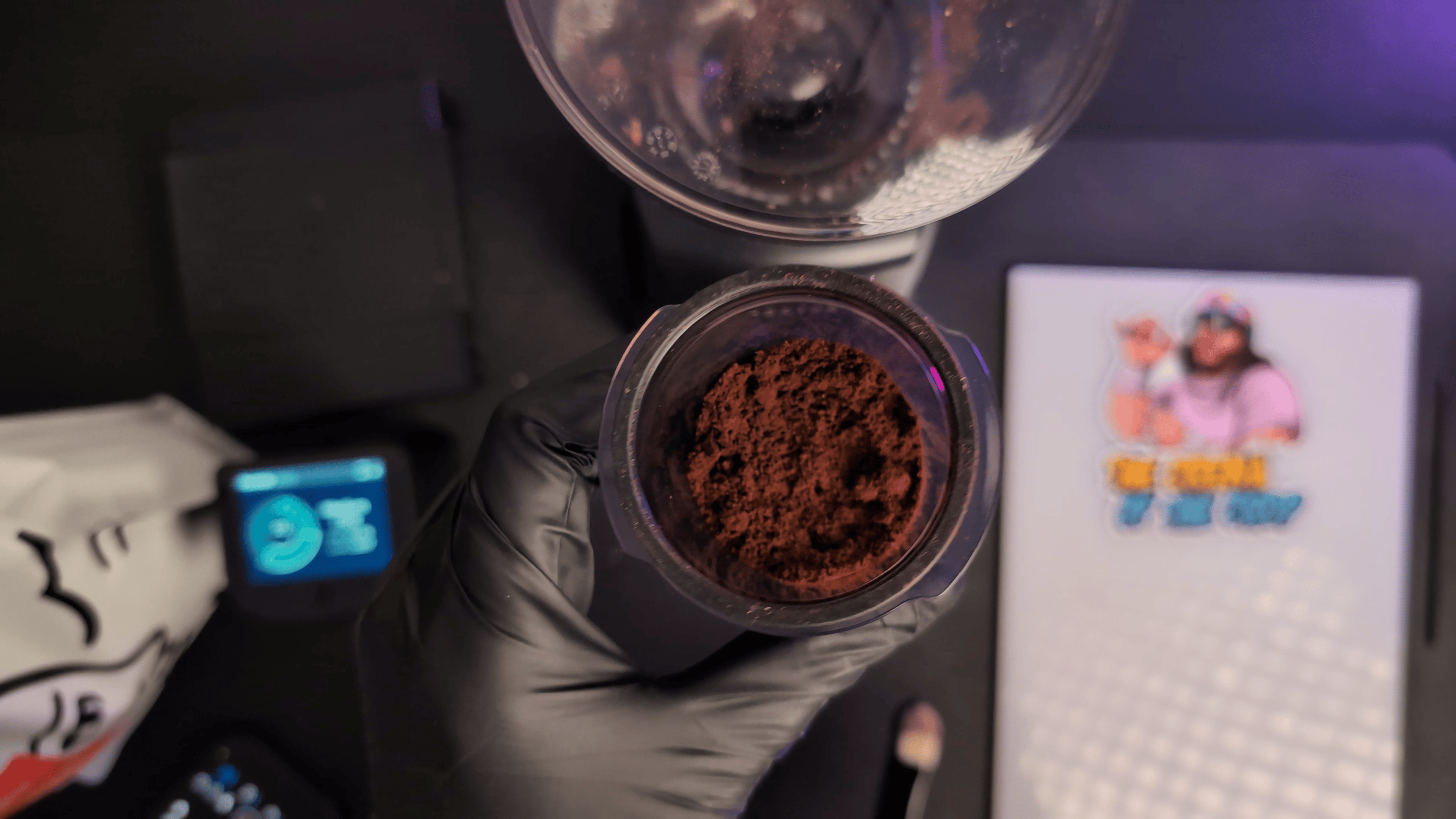
The only problem here is retention. The Encore ESP can retain a pretty significant amount (read on to see how it performed in our testing), meaning 18 grams of coffee in the hopper does not equal 18 grams in the dose cup. At the end of the day, adding some extra weight before the grind and re-weighing after isn’t the end of the world, but it does mean that the basic on/off grinding has its limitations, particularly when compared to the ability to set a timer on its more feature-rich sibling, the Encore ESP Pro.
Burrs & Calibration
The Encore ESP uses Baratza’s M2 40mm conical steel burrs, an upgrade on the previous-generation M3 burr used in the more basic Encore with sharper cutting blades.
The ESP’s burrs can be removed easily by unclipping the upper ring burr which is held in place by two plastic tabs, and unscrewing the quick release knob.
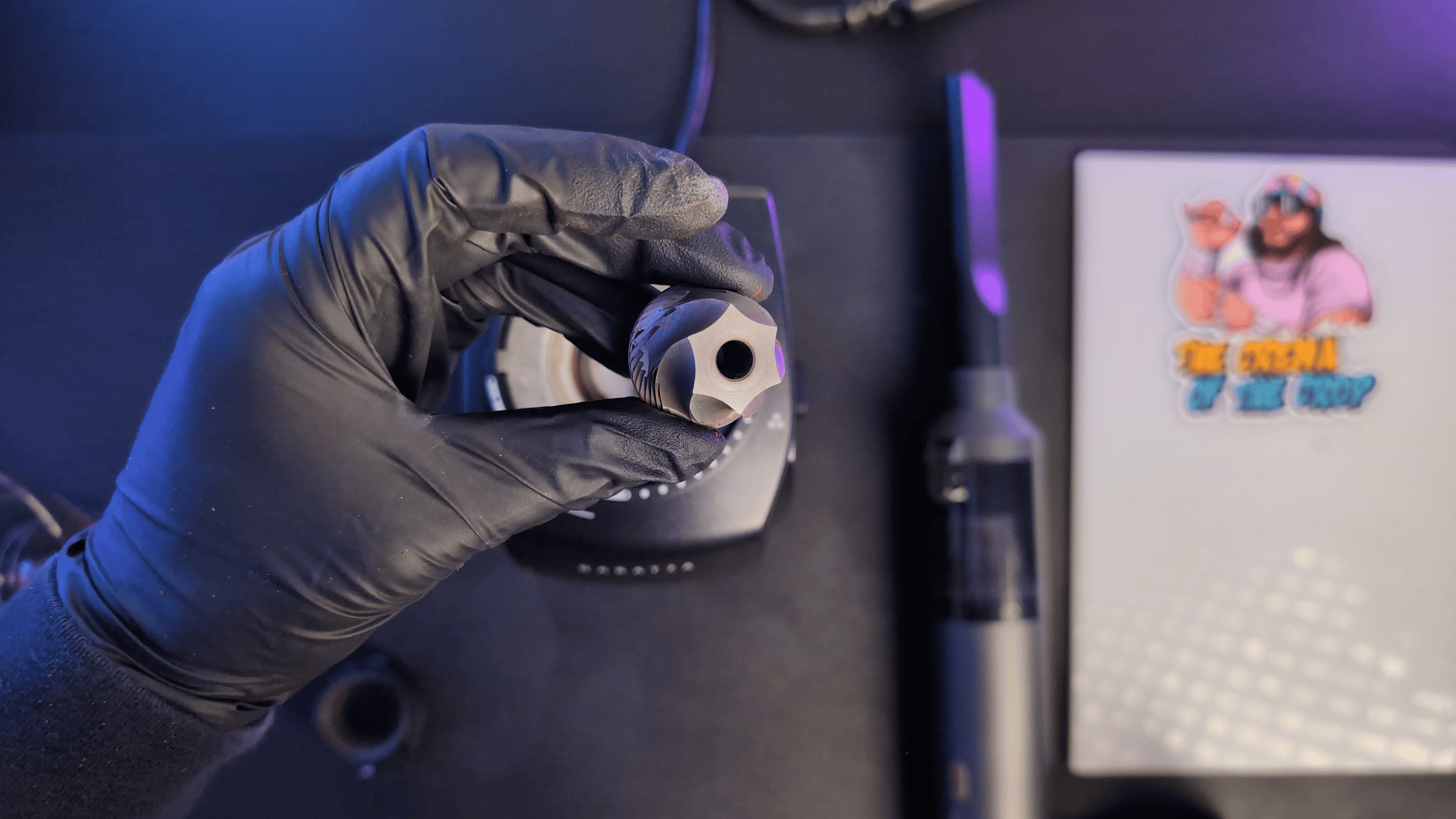
The quick release makes cleaning easy, and it allows for the simple addition of one of the included shims to increase the fineness of the bottom end of the grind settings.
Everyday adjustments between grind settings are stepped (unlike the ESP Pro, which offers stepless adjustments) but at the aforementioned 20 microns-per-click for espresso, the precision should be there to accurately dial in for any grind size on the Encore ESP.
Performance
Particle size distribution
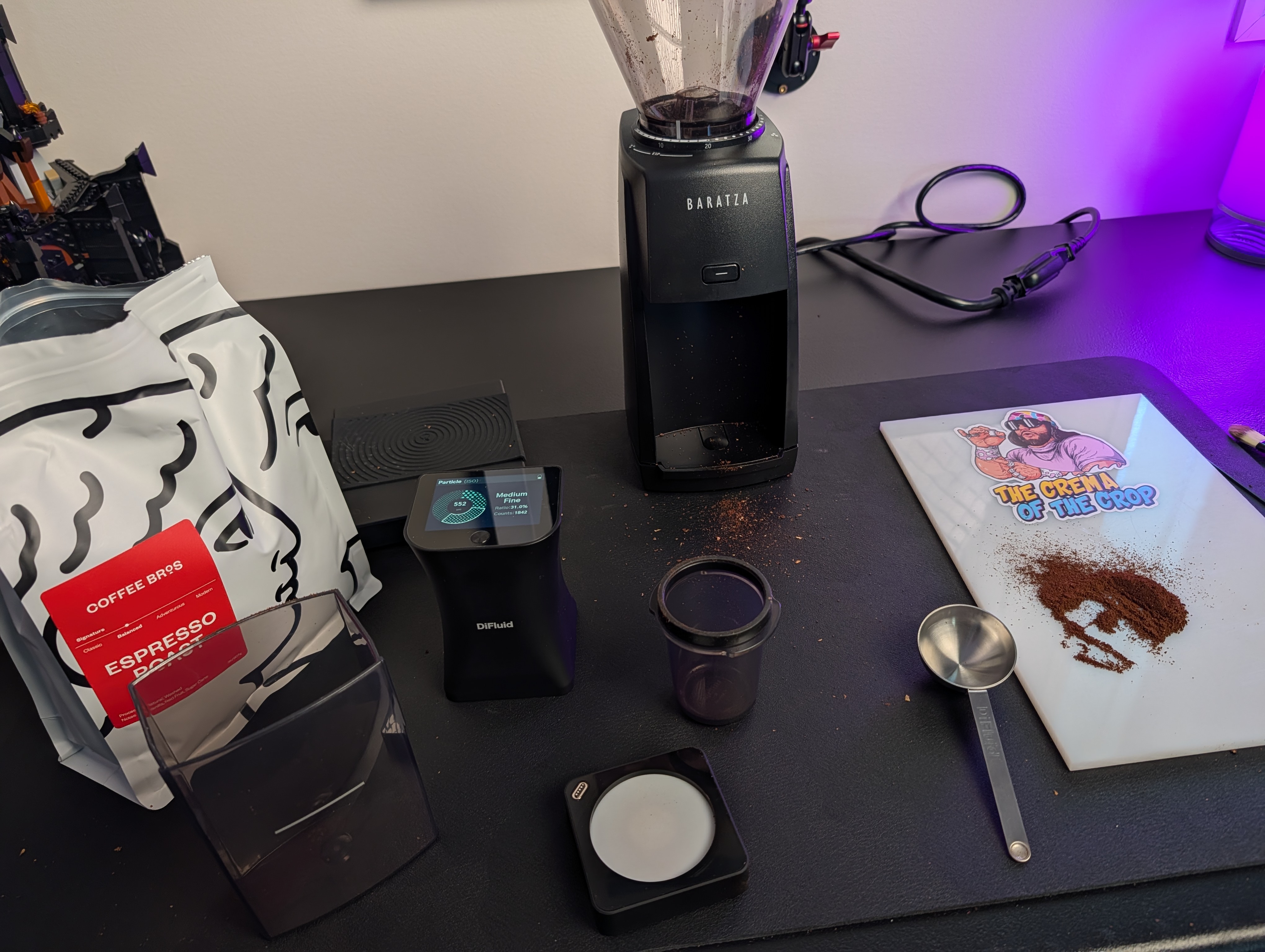
Disclaimer: I use the DiFluid Omni particle analyzer. This has the ability to automatically disperse the particles before analyzing; however, at coarser grind levels, it tends to push the grinds to the edge. So I manually separate the grinds on the tray up until ~600um, then use the automatic dispersion for espresso territory. As always, this is not a definitive analysis. Actual um sizes vary a lot, but this data can be used to spot consistencies and strengths/weaknesses.
Grind Analysis
Baratza Encore ESP Particle Distribution
Based on 5 test runs. Lower coefficient of variation = more consistent grind.
Data: DiFluid Omni NIR Analysis. 20 settings tested with 100 total samples. I use Sample Standard Deviation (applying Bessel's Correction) to calculate consistency scores. By dividing my variance by n-1 rather than n, we account for the fact that these tests are a subset of the grinder's total output, providing a more honest estimate of real-world repeatability.
Particle Distribution Spectrum
Baratza Encore ESP - Normal Distribution Curves
Linear Scaling Analysis
Baratza Encore ESP - Setting vs D50
The Baratza Encore ESP shows a split personality. In the fine range, specifically between settings 2 and 8 the ESP is surprisingly disciplined. My tests recorded a repeatability score of roughly 4.9 percent (the lower the number, the better) at setting 2, and staying between 4.7 and 6.1 throughout the full espresso ranges. This suggests that for daily espresso prep the grinder is a stable partner that won't give you wild surprises from one shot to the next. However the data reveals several notable spikes in volatility as you move through the dial. The moody variances reached as high as 13.9 percent at setting 16 in my specific unit.
Another thing to note is that at the finest settings of 2-4, the particle analysis mapped a higher grind size than setting 6. However, this appears to be due to agglomeration rather than mechanical play from burrs.
Also, when compared to the Fellow Opus I recently reviewed, the Encore ESP has a slightly more erratic character as it moves through its transition zones. The Opus maintains a more predictable consistency floor across its entire range with most settings staying well under the 10 percent threshold for repeatability. While the Opus encountered only one significant hiccup in my tests, the ESP fell above the threshold at multiple points on the dial. This implies that the Opus might offer a slightly more reliable daily workflow across different brew methods.
Retention Test
Retention on the Encore ESP is one of its most notable hurdles. During my testing at espresso settings, I found significant variability in how much coffee actually makes it into the dose cup. A standard test without any water misting resulted in 1.4 grams of retained grounds, which is a high enough margin to throw off a precise recipe. Utilizing a light mist of water reduced this loss, though the results remained inconsistent across multiple runs. I recorded retentions ranging from 0.4 grams to a full gram even with identical prep. This suggests that the internal geometry of the ESP allows for a high amount of static and internal exchange. Users should expect to purge a small amount of coffee when switching settings or beans to ensure they are getting a fresh dose.
Sound and Power Usage
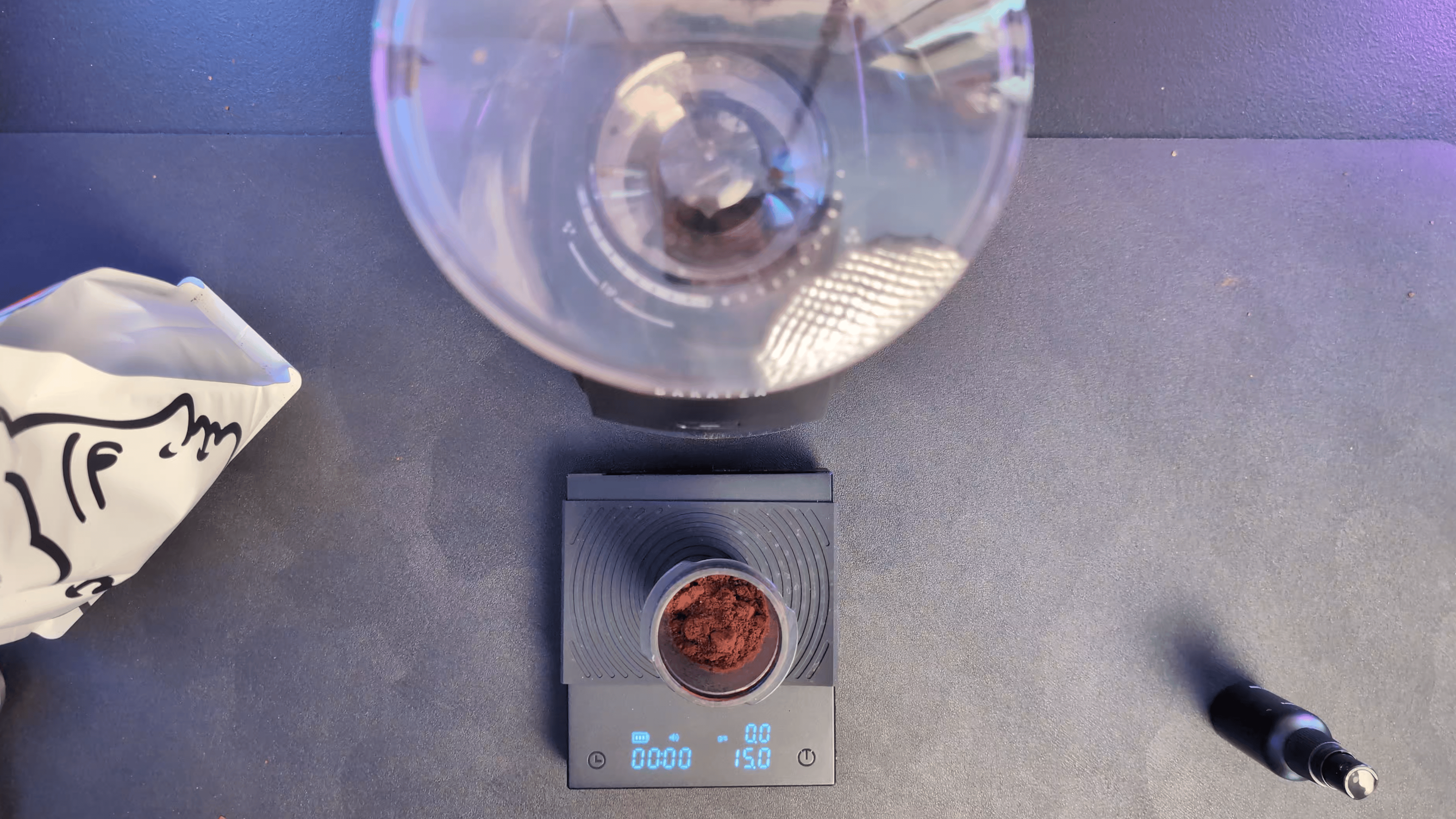
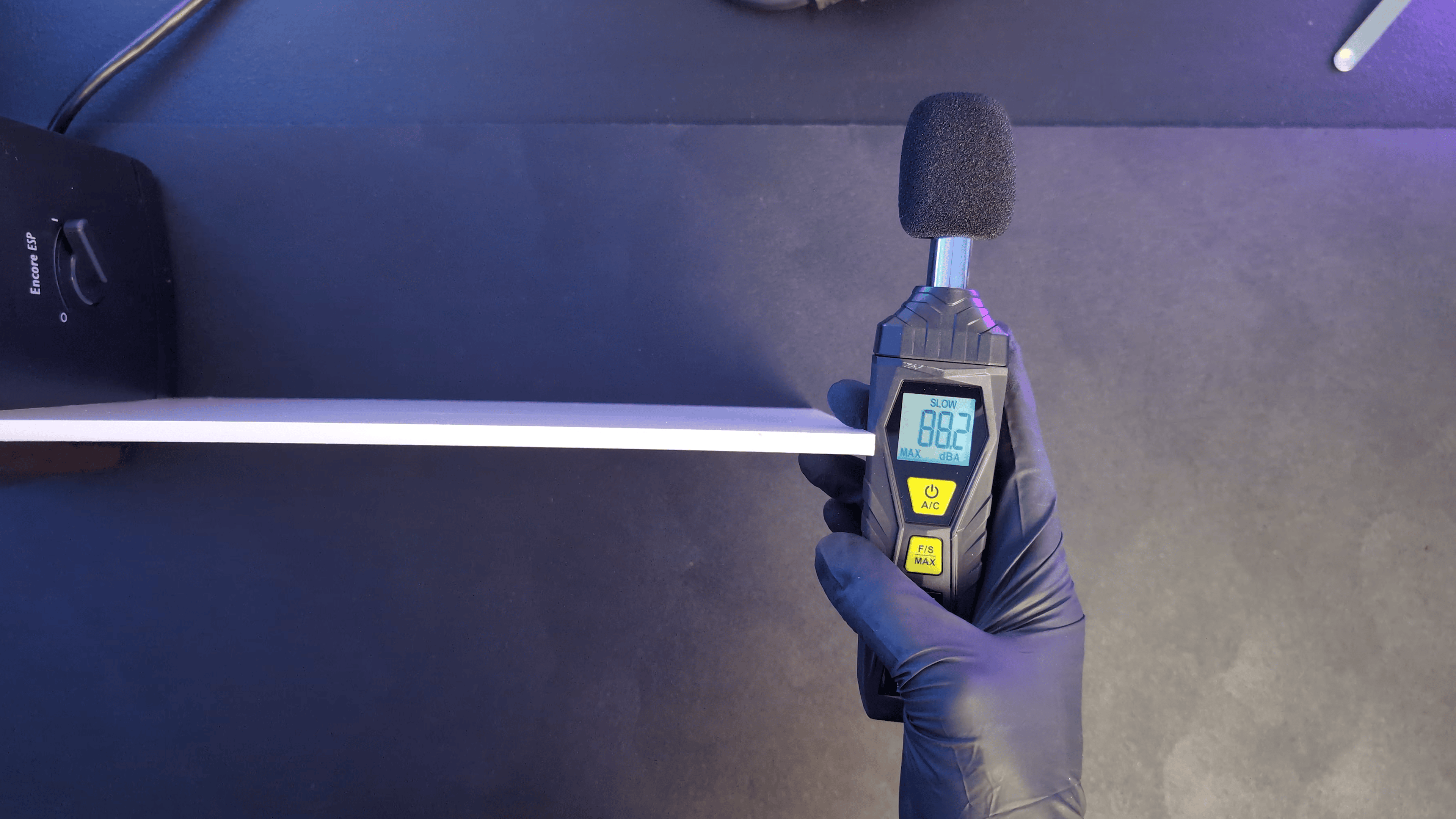
The acoustic profile of the Encore ESP is aggressive. It recorded a maximum sound level of 88.2 decibels with an average of 86.5 decibels during active grinding. This is a significant jump over the Fellow Opus, which peaked at only 77.3 decibels in the same environment. That 11 decibel difference is highly perceptible. Beyond the raw volume, the ESP produces a high pitched whine that is more piercing than the lower hum of its competitors. On the power side, the motor draws between 125 and 130 watts under load. When spinning without beans, the draw drops to 20 watts.
Dialing In and Taste
Dialing in for a balanced shot required some patience but eventually yielded a classic espresso profile. Using a medium roast from Coffee Brothers, I landed on an 18 gram dose that produced a 36 gram yield in 31 seconds. In the cup, the ESP reflects its wider particle distribution by leaning into traditional espresso characteristics. It produces a shot with substantial body and a lingering sweetness. While it lacks the high definition clarity of a flat burr system, it excels at providing the thick and syrupy mouthfeel that many traditional espresso drinkers prioritize.
Technical Specifications
| Brand | Baratza |
|---|---|
| Model | Encore ESP |
| Adjustment | Stepped |
| Range | 230 - 1380 μm |
| Settings | 28 mapped |
Pro Tips
- 01Swap out the included plastic dosing cup for a metal one to help reduce static.
- 02Consider grabbing a third party bellows custom sized for the Encore ESP to help push through retained grinds.